
Test
Penetration Testing and Retesting
Scope and perform external, internal, web, API, cloud, and wireless penetration testing with remediation guidance and retesting.
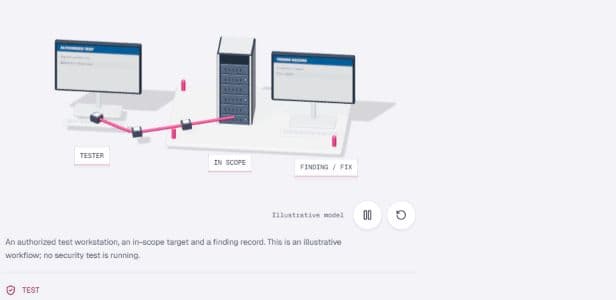
An authorized test workstation, an in-scope target and a finding record. This is an illustrative workflow; no security test is running.
- 01Verify identityConfirm the client and responsible owner.
- 02Authorize scopeRecord targets, limits, and timing.
- 03Execute safelyTest with controls and audit evidence.
- 04Report and retestTrack findings through verified closure.
QCS VerifyGrid client workspace
Move from testing request to controlled assurance.
Verify your organization, request QCS review, and enter an approval-gated workspace for scope, authorization, findings, remediation, reports, and retests.
Best fit
Who this service is for
Teams that need credible security testing for client requirements, compliance, product launch, audit readiness, or internal assurance.
Pentesting is connected to remediation and retesting so findings become decisions, fixes, and proof instead of a static PDF.
Outcomes to plan for
- Clear scope
- Risk-ranked findings
- Retesting path
- Client-ready reports
Operational triggers
Choose this service when these signals appear.
Scope
What we inspect, operate, or change.
Agree the systems, access permissions and change boundaries before work starts. The engagement scope determines which activities are included.
- Rules of engagement
- External/internal testing
- Web/API testing
- Cloud/wireless testing
- Retesting and closure evidence
Deliverables
What remains with your team after the work.
- Scope sheet
- Risk-ranked report
- Remediation checklist
- Retest certificate or summary
- Executive explanation
FAQ
Questions to resolve before work begins.
What should be prepared before a penetration test?
Prepare asset lists, authorization contacts, testing windows, exclusions, previous reports, emergency contacts, and business context for the report audience.
Why is retesting important?
Retesting validates whether fixes actually reduce exposure and gives clients or auditors evidence that findings were handled.
Request review
Discuss penetration testing and retesting.
Tell us about your environment, the issue or project, and the outcome you need. Do not include passwords or sensitive configuration details.