
Secure
Network Security Services
Harden firewalls, VPNs, remote access, segmentation, logs, DNS, email pathways, and Zero Trust readiness.
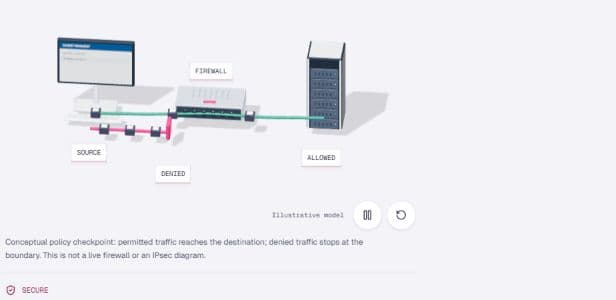
Conceptual policy checkpoint: permitted traffic reaches the destination; denied traffic stops at the boundary. This is not a live firewall or an IPsec diagram.
- 01Current stateMap the environment and pressure.
- 02Authorized scopeAgree access, impact, and owners.
- 03Engineering workOperate, change, or remediate.
- 04Verified handoffDocument evidence and next controls.
Best fit
Who this service is for
IT leaders and security teams that need practical hardening without turning every finding into a large enterprise program.
Security work is framed around exposure, access, visibility, response, and remediation evidence rather than tool names alone.
Outcomes to plan for
- Cleaner firewall rules
- Reduced remote-access risk
- Audit-ready evidence
- Better segmentation
Operational triggers
Choose this service when these signals appear.
Scope
What we inspect, operate, or change.
Agree the systems, access permissions and change boundaries before work starts. The engagement scope determines which activities are included.
- Firewall rule review
- VPN and admin access hardening
- Segmentation design
- Log and alert review
- SASE/Zero Trust roadmap
Deliverables
What remains with your team after the work.
- Security posture summary
- Firewall cleanup list
- Remote access risk notes
- Evidence checklist
- Remediation roadmap
FAQ
Questions to resolve before work begins.
Do network security services replace a SOC?
Not always. QCS can help prepare the network layer for SOC/MDR by cleaning firewall rules, improving logging, hardening access, and creating incident-ready evidence.
What is SASE readiness?
SASE readiness checks whether SD-WAN, ZTNA, SWG, CASB, FWaaS, remote access, logging, and identity controls are mature enough for a secure cloud-delivered network model.
Request review
Discuss network security services.
Tell us about your environment, the issue or project, and the outcome you need. Do not include passwords or sensitive configuration details.